Driveway Paving vs. Asphalt Resurfacing: A Guide for New York Homeowners
Updated on:
June 3, 2026
Your driveway is more than just a place to park your vehicle; it is the first impression of your property and a significant investment in your home’s infrastructure. In New York, where climate extremes and seasonal fluctuations wreak havoc on asphalt surfaces, choosing between simple resurfacing and full-scale paving is a critical decision. This guide helps you navigate that choice with expert insights.
Understanding Your Driveway’s Lifecycle: Why Choice Matters in New York
The Impact of New York’s Climate on Asphalt Surfaces
New York experiences some of the most aggressive freeze-thaw cycles in the country. When moisture penetrates the surface, it expands upon freezing, causing the asphalt to heave and buckle. This constant movement accelerates the degradation of even high-quality asphalt, necessitating a proactive approach to maintenance.
Distinguishing Between Cosmetic Wear and Structural Failure
It is vital to separate minor surface oxidation—which is purely cosmetic—from deep-seated structural failure. While you can remedy minor cracks with sealant, structural failure indicates that the foundation beneath the pavement is compromised, rendering surface-level repairs ineffective.
Diagnostic Phase: Assessing the Current Condition of Your Driveway
 Understanding the difference between cosmetic surface wear and deep structural failure is key to deciding whether to resurface or fully replace your driveway.
Identifying Surface Deterioration: When to Worry About Potholes and Cracks
Minor surface cracks are normal. However, widespread alligator cracking (resembling a reptile’s skin) or deep potholes suggest that the base layer has failed. If water reaches the sub-base, the surface will continue to deteriorate regardless of how often you patch it.
Evaluating the Base Layer: The “30% Rule” for Replacement
We utilize the “30% Rule”: if 30% or more of your driveway’s base layer shows signs of instability, damage, or soft spots, resurfacing is a poor investment. In such cases, full reconstruction is necessary to prevent throwing good money after bad.
Signs of Drainage Issues and Compromised Catch Basins
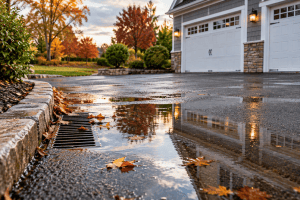
Poor drainage is the primary enemy of any asphalt driveway. If you notice pooling water or signs of soil erosion around your catch basins, address these drainage issues before finalizing any paving plans to protect your long-term investment.

What is Asphalt Resurfacing? (The “Overlay” Approach)
The Resurfacing Process: From Crack Cleaning to Asphalt Overlay
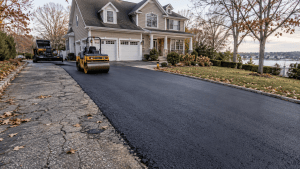
Resurfacing involves applying a new layer of asphalt over the existing one. A professional crew must first clean all cracks and apply a bonding agent to ensure the new layer adheres correctly to the old surface.
The Role of Milling in Achieving a Level Surface
Milling is essential. By grinding down the edges where the driveway meets your garage apron or sidewalk, a crew ensures that the new overlay sits flush, preventing tripping hazards and clearance issues for your vehicles.
Resurfacing is cheaper upfront. However, it does not address underlying base failures. It is an excellent choice for a driveway that is structurally sound but visually faded.
What is Full Driveway Paving? (The Total Reconstruction)
Starting from Scratch: Excavation and Base Layer Preparation
Total reconstruction involves excavating the old asphalt and properly grading the soil. This creates a clean slate, ensuring the new surface is perfectly pitched for drainage.
The Importance of Recycled Concrete Aggregate (RCA) and Sub-Base Stability
For New York’s frost-prone soils, RCA is the gold standard for a sub-base. It provides superior compaction and moisture resistance, ensuring your new driveway can withstand heavy traffic and seasonal pressure.
New Construction vs. Replacement: When Paving is the Only Solution
If your driveway has extensive structural damage, total replacement is the only viable path. Professional paving crews provide the heavy machinery—including rollers and laser-guided levelers—necessary to ensure a finish that rivals high-end commercial properties.
Comparative Analysis: Paving vs. Resurfacing
Cost Comparison: Upfront Investment vs. Lifetime Value
While paving costs more initially, it offers superior long-term value. A professionally installed new driveway lasts years longer than a resurfaced one, especially when factoring in the cost of repeated repairs on a failed base.
Expected Lifespan in the Central New York and Long Island Environments
A well-constructed asphalt driveway in New York should last 15 to 20 years. Resurfacing can extend that life, but only if the underlying structure remains pristine.
A full paving project offers a uniform, clean look that dramatically increases your property’s curb appeal. The quality of communication and craftsmanship provided by a reputable crew is the defining factor in achieving a pristine finish.
Conclusion
Deciding between resurfacing and paving requires a thorough assessment of your driveway’s foundation. If your base is solid, resurfacing is a cost-effective solution. If it has failed, full paving is the only way to protect your property’s value. Always prioritize professional craftsmanship and verify all local permits to ensure your project complies with New York’s rigorous standards.
Recent Posts