Avoid Costly Repairs: The Importance of Crack Filling Before Cold Weather
Updated on:
September 3, 2025
When fall arrives in New York, property owners are quick to rake leaves, clean gutters, and prepare their homes for the colder months. But one task often overlooked is crack filling in asphalt pavement. It may seem minor compared to other fall chores, but ignoring cracks in asphalt surfaces now can lead to serious pavement problems once winter temperatures set in.
I’ve seen this firsthand. A homeowner in Nassau County ignored a small crack in their driveway last September. By February, the freeze-thaw cycles had widened it into multiple alligator cracks and potholes. What could have been solved with an inexpensive blacktop crack filler turned into a full resurfacing project that cost thousands.
This story isn’t unique — and it shows why pavement maintenance in September is one of the smartest investments you can make.
Understanding Why Asphalt Cracks Form
Even the best asphalt surfaces aren’t immune to cracks. Over time, traffic loads, UV rays, and water intrusion put stress on the base layer. As the asphalt goes through expansion and contraction in different seasons, it develops weak points.
The most common types of cracks include:
- Transverse cracks – stretch across the pavement due to thermal stress.
- Longitudinal cracks – run parallel to traffic flow, often caused by traffic volume or poor joint construction.
- Edge cracks – appear near the sides of roads and parking lots where drainage is poor.
- Alligator cracks – resemble reptile skin and indicate deep pavement damage in the structure.
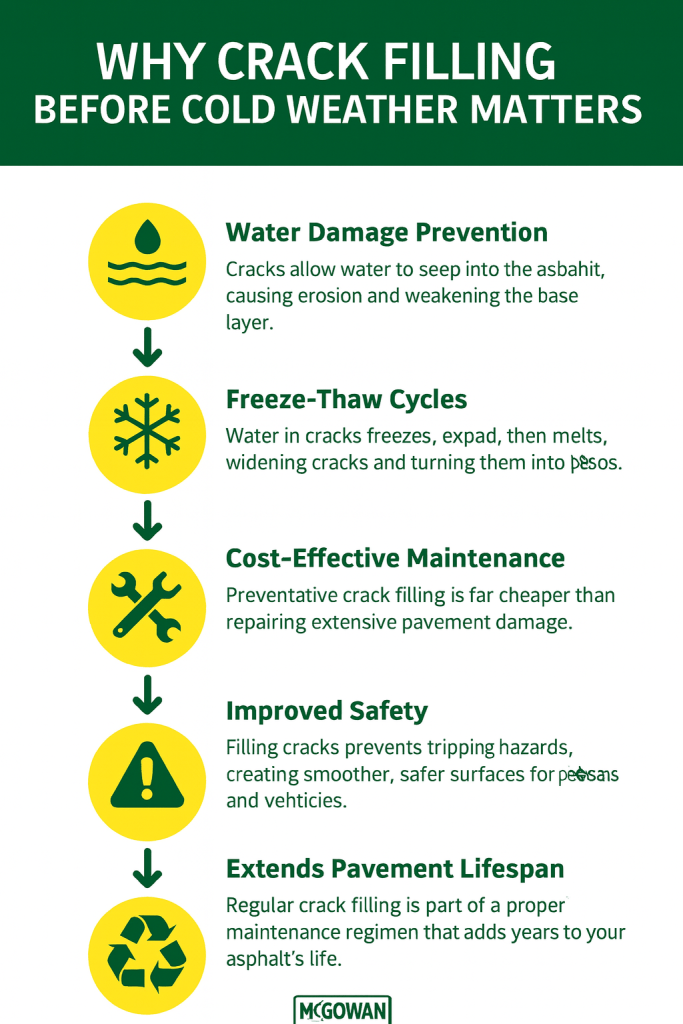
Left untreated, these cracks allow water infiltration into the asphalt pavement, causing erosion
The Freeze-Thaw Cycle: Asphalt’s Greatest Enemy
In the Northeast, the freeze-thaw cycle is the biggest threat to asphalt. When water seeps into cracks during fall, it freezes at night, expands, and forces the cracks wider. When temperatures rise during the day, the ice melts, but the crack doesn’t shrink back. This repeated expansion and contraction is what causes small cracks to become potholes by February.
Add de-icing chemicals, snow plows, and heavy traffic conditions to the mix, and you’ve got the perfect recipe for rapid pavement damage.
Why Fall Is the Season’s Favorable Weather Window
According to the National Center for Asphalt Technology, fall is one of the most effective times for asphalt crack sealing. September and October offer season’s favorable weather conditions: mild climate conditions and consistent temperatures. These allow crack sealants to adhere properly and cure without being compromised by extreme heat or freezing cold.
Trying to seal cracks in winter is far less effective. While cold-weather crack sealants exist, they’re temporary and not as durable as hot-applied sealants. By acting in September, property owners ensure long-lasting protection before the snow falls.
Crack Sealing Methods and Materials
Professional asphalt contractors use several methods to repair cracks, depending on their size and severity:
- Hot-applied crack sealants – rubberized sealants heated and poured into cracks. They bond tightly and remain flexible during thermal stress.
- Cold-applied fillers – often used for small cracks. Easy to apply with a caulk gun, but less durable.
- Crack routing and sealing – involves widening the crack slightly before applying hot-pour crack sealants, ensuring better adhesion.
- Infrared asphalt repair – used for larger pavement problems, combining heat and fresh asphalt to restore damaged areas.
Benefits for Property Owners and Managers
For homeowners, crack filling protects their driveways, prevents water damage, and maintains curb appeal. Imagine welcoming guests during the holidays with a smooth, clean driveway instead of one riddled with cracks.
For business owners and facility managers, the stakes are higher. A poorly maintained parking lot isn’t just unattractive — it creates safety hazards and liability risks. Customers tripping on uneven asphalt or damaging tires on potholes can lead to expensive claims. That’s why many commercial property owners schedule preventative maintenance services each September.
Municipalities also benefit. Towns across Long Island, Nassau, Suffolk, and the NY Capital Region plan pavement maintenance now to avoid costly road repairs and keep traffic flowing safely during winter.
Long-Term Benefits of Preventative Maintenance
Crack sealing may feel like a small step, but the long-term benefits are massive. Studies show that every $1 spent on crack repair saves $4–$5 in future asphalt repair or resurfacing.
Regular asphalt maintenance using sealcoating services and crack filling can:
- Extend the life of pavement by 5–10 years
- Reduce the risk of potholes
- Improve appearance and infrastructure management
- Support sustainable practices by delaying full repaving projects
The Cost of Waiting: Pavement Problems Multiply
Waiting until spring to repair cracks is risky. By then, soil erosion, water systems failure, and deep potholes may require full resurfacing or reconstruction. Hiring a professional asphalt repair company for crack sealing methods in September is far cheaper than funding major asphalt paving projects in March.
Final Thoughts
Asphalt is built to last, but only with the right care. Cracks, no matter how small, are entry points for water infiltration that lead to serious pavement problems in cold weather. By investing in hot-applied crack fillers, sealcoating services, and professional crack repair now, property managers, homeowners, and business owners across Long Island can avoid costly repairs and keep their asphalt surfaces safe, durable, and attractive all winter long.
Ready to protect your pavement before the first frost? Contact McGowan 1928 today for expert asphalt crack sealing and comprehensive pavement maintenance services.
Recent Posts