Best Outdoor Construction Projects to Plan Before Summer on Long Island
Updated on:
May 20, 2026
Summer on Long Island has a way of exposing the parts of a property that were easy to ignore in colder months. A cracked walkway that felt like a small issue in March becomes a daily trip hazard when customers, tenants, employees, and visitors are outside more often. A faded parking lot becomes harder to manage when traffic increases. A drainage problem that only appeared after winter storms can turn into standing water near entrances, patios, loading areas, or pedestrian crossings after a heavy summer rain.
That is why the best outdoor construction projects are usually the ones planned before the season is already in full swing.
For commercial properties, apartment communities, retail centers, restaurants, schools, municipal spaces, and mixed-use buildings, summer is not just warmer weather. It is heavier use. More vehicles. More foot traffic. More outdoor activities. More deliveries. More visitors coming from Nassau County, Suffolk County, beach communities, downtown business districts, and surrounding neighborhoods. By Memorial Day Weekend, many properties are expected to look clean, safe, accessible, and ready.
Outdoor construction on Long Island also comes with local pressure that not every region faces. Freeze-thaw cycles leave cracks behind. Coastal air and road salt can wear down concrete, masonry, and metal site features. Spring rain tests drainage systems. Summer heat and UV rays dry out asphalt surfaces. Busy roads near Jones Beach, Robert Moses, Sunken Meadow, village centers, and commercial corridors can make timing and access more complicated.
Planning early gives property owners more control. Instead of rushing into emergency repairs during peak season, you can prioritize the work that will improve safety, curb appeal, traffic flow, drainage, accessibility, and long-term property value.
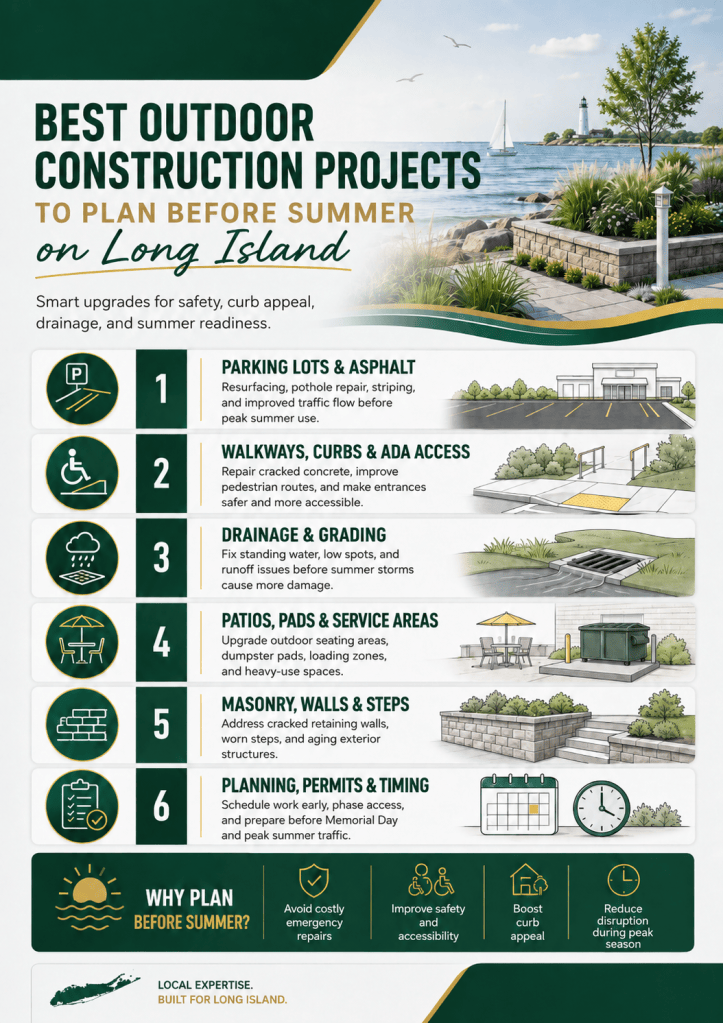
Parking Lot Paving and Asphalt Repairs Before Summer Traffic Builds
The parking lot is one of the most honest parts of a property. It tells people how well the site is maintained before they ever reach the front door. A customer may not know the difference between asphalt paving, resurfacing, sealcoating, or reconstruction, but they can feel a pothole when they drive over it. They can see faded parking lot markings. They can notice puddles, broken edges, cracked asphalt, uneven surfaces, and confusing traffic patterns.
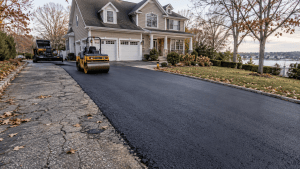
Before summer, parking lots should be inspected for cracks, potholes, raveling, soft areas, drainage issues, and worn striping. Long Island winters often leave behind damage that becomes more visible once the weather warms up. Water enters cracks, freezes, expands, and weakens the pavement. When temperatures rise, that weakened asphalt can start to loosen, crumble, or spread under daily traffic.
For some properties, asphalt maintenance may be enough. Crack sealing, blacktop pothole repair, seal coating, and fresh pavement markings can extend the life of a lot that is still structurally sound. But when damage is spread across large areas, simple patching may only buy a little time. A lot with repeated potholes, widespread cracks, warping, buckling, poor drainage, or failed patches may need resurfacing or more extensive reconstruction.
This matters even more for properties that see heavier summer movement. Retail centers may have more shoppers. Restaurants may need pickup lanes, delivery areas, and outdoor seating access. Apartment complexes may deal with more visitor parking. Medical offices need smooth, reliable access for patients. Event venues need parking areas that can handle peak business periods without confusion.
A strong parking lot plan should consider more than the asphalt surface. It should account for parking access, pedestrian safety, ADA-accessible parking, crosswalks, traffic signs, lighting, drainage, EV charging stations, shuttle drop-off areas, and delivery routes. If the lot is being resurfaced or restriped, it may be the right time to improve the layout instead of simply repainting the same worn design.
The best time to schedule this work is before contractor calendars fill and before tenants or customers are relying on the lot every day. A paving project can often be phased to keep portions of the property open, but that only works well when there is time to plan.
Concrete Walkways, Curbs, and Pedestrian Routes That Actually Feel Safe
A walkway does not need to be dramatic to be dangerous. Sometimes the problem is a lifted slab near a doorway, a broken curb at the edge of a parking lot, a cracked landing outside a commercial entrance, or a crosswalk that no longer lines up clearly with the safest pedestrian path.
On Long Island properties, concrete walkways and curbs take a beating from winter salt, plows, settlement, tree roots, drainage problems, and daily use. By spring, the damage may be obvious: cracked sidewalks, uneven slabs, chipped curbs, worn ramps, puddling near entrances, or concrete that has started to spall and flake. If these areas are not repaired before summer, the property may feel less safe at the exact time more people are using it.
Pedestrian routes are especially important for commercial and public-facing properties.
Curbs also do more than frame the pavement. They help control water, protect landscaped areas, guide vehicles, and define the edge between parking and pedestrian spaces. When curbs are cracked, sunken, or missing, water can move where it should not, vehicles can cut corners, and the site begins to feel worn down.
This is one of the highest-value pre-summer projects because it improves both safety and perception. A clean walkway, repaired curb line, visible crosswalk, and stable entrance area can make an older property feel more cared for without a full exterior renovation.
Drainage and Grading Work That Prevents the Same Problems From Coming Back
Drainage is not always the project that gets the most attention, but it is often the reason other outdoor construction projects fail early.
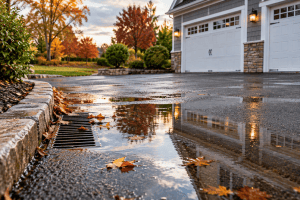
A property can have new asphalt, fresh concrete, and clean masonry, but if water keeps sitting in the wrong place, damage will return. Standing water weakens pavement. Runoff washes out soil. Poor grading sends water toward buildings, curbs, retaining walls, and pedestrian areas. A low spot in a parking lot can become a pothole factory. A puddle near a walkway can turn into a slip hazard. A clogged or poorly placed drain can create repeat maintenance calls every time it rains.
On Long Island, drainage planning should never be an afterthought. The region’s coastal weather, heavy rain events, low-lying areas, and seasonal freeze-thaw cycles put pressure on exterior surfaces. Properties near waterfront communities, busy commercial corridors, parks, marinas, and village centers may deal with different site conditions, but the basic concern is the same: water needs somewhere reliable to go.
Drainage work can also protect other investments. If you plan to resurface a parking lot, replace concrete, repair masonry, or upgrade outdoor spaces, the water issue should be addressed first. Otherwise, you may be paying to dress up the same problem that caused the damage in the first place.
Patios, Dumpster Pads, Loading Areas, and the Back-of-Property Work People Forget
Not every outdoor construction project happens where customers take photos or tenants first walk in. Some of the most important work happens in the rougher areas of a property: behind restaurants, near dumpsters, beside loading docks, around service entrances, along rear drive lanes, and under heavy equipment.
These areas are easy to ignore because they are not always part of the main curb appeal. But operationally, they matter. A cracked dumpster pad can make waste pickup messy and damaging. A weak asphalt service lane can rut under delivery trucks. A poorly drained rear entrance can create water and ice problems. A broken concrete pad near mechanical equipment can become unsafe for maintenance crews.
Concrete pads are often the right solution in areas where asphalt is not strong enough for repeated concentrated loads. Dumpsters, compactors, heavy containers, and turning trucks can damage asphalt quickly, especially when the surface is already soft or cracked. A properly built concrete pad can create a more durable working surface and reduce ongoing pavement damage.
Outdoor patios and gathering areas are a different kind of priority. These spaces shape how people experience the property during the warmer months. A restaurant patio, apartment courtyard, office seating area, or community walkway should feel level, clean, and safe. Cracked concrete, uneven pavers, ponding water, loose steps, or damaged edges can make the area feel neglected even if the rest of the property is in good condition.
The best outdoor construction projects solve friction. They make the property easier to use, easier to maintain, and less likely to create the same complaints every season.
Masonry, Steps, Retaining Walls, and Exterior Repairs That Protect the Property
Masonry and exterior structural features often age quietly until they do not. A small crack in a retaining wall. A loose brick near a step. A concrete landing that has settled slightly. A block wall with moisture staining. A stoop that looks fine until you notice the edge breaking apart.
These issues deserve attention before summer because they affect both safety and appearance. They also tend to get worse when water is involved.
Long Island properties deal with moisture, salt, freeze-thaw movement, and shifting soil conditions. Water can enter small cracks in masonry, freeze during colder months, and expand the damage. Poor drainage behind a retaining wall can add pressure until the wall begins to lean, bow, or separate. Steps and landings can settle when the base underneath erodes or weakens. By spring, the signs may be visible, but many owners wait until the damage becomes harder to ignore.
Retaining walls should be evaluated carefully if they are leaning, cracking, bulging, separating from adjacent surfaces, or holding water behind them. Surface patching may improve appearance, but it does not solve pressure, drainage, or structural movement. Depending on the condition, the wall may need drainage improvements, partial rebuilding, reinforcement, or full reconstruction.
Masonry repairs also help the property feel established and cared for. Clean brickwork, repaired retaining walls, stable steps, and crisp concrete transitions give the exterior a sense of permanence. That matters on Long Island, where many properties are older, heavily used, or exposed to harsh seasonal conditions.
Planning Around Permits, Traffic Flow, and the Long Island Summer Calendar
A good outdoor construction project can still become stressful if the timing is wrong. That is especially true on Long Island, where summer brings more traffic, more visitors, more outdoor events, and more pressure on commercial properties.
Planning should start with the real rhythm of the property. A retail center may need work phased around weekend shopping. A medical building may need safe patient access throughout construction. A restaurant may want patio and walkway repairs completed before outdoor dining demand increases. An apartment community may need tenant notices before parking areas are closed. A school or municipal facility may prefer work during low-use windows. A property near a beach route, downtown, or event area may need to avoid certain days entirely.
Some projects may also require permits, approvals, inspections, or coordination with local building departments. This can vary by town, village, scope of work, drainage changes, sidewalk involvement, curb work, or structural repair needs. It is better to identify those requirements before the contractor is ready to start, not after equipment is scheduled.
Memorial Day Weekend is a practical planning marker for many Long Island properties. By then, outdoor areas should ideally be ready for heavier seasonal use. Parking lots should be patched, striped, or resurfaced. Walkways should be safe. Drainage problems should be identified. Patios and gathering areas should be usable. Retaining walls, steps, and exterior repairs should not be waiting for the busiest months of the year.
McGowan helps property owners, managers, and facility teams think through that sequence. The goal is not just to complete a project. It is to prepare the property for real use, reduce repeat problems, and make sure the exterior supports the people who depend on it every day.
Recent Posts