Should You Repave Your Driveway Before a Long Island Winter?
Updated on:
September 3, 2026
As fall moves across Long Island, homeowners often start preparing their properties for colder weather. Gutters are cleaned, outdoor furniture gets stored, and heating systems are checked. But there is another part of the property worth inspecting before temperatures drop: the driveway.
Cracks, potholes, low spots, drainage problems, and deteriorated asphalt may seem manageable in September or October. After repeated winter rain, snow, freezing temperatures, and thawing, those same problems can become considerably worse.
So, should you repave your driveway before winter?
In many cases, yes, if the driveway is already showing significant deterioration and weather conditions still provide a proper paving window. Repaving before winter can prevent existing damage from being exposed to another season of water infiltration and freeze-thaw movement. However, paving too late in the season, when the ground is cold or wet and asphalt loses heat too quickly, can create its own problems.
The decision should be based on the condition of the driveway, drainage, base stability, type of damage, and expected weather—not simply the month on the calendar.
Key Factors to Consider Before Repaving
The first question is not whether winter is approaching. It is what condition is the driveway in right now?
A driveway with a few narrow surface cracks may not require complete replacement. Crack filling or localized asphalt repair may prevent water from entering the pavement and help the surface get through another winter.
A driveway with widespread cracking, multiple potholes, sinking sections, severe edge deterioration, or recurring standing water requires a different conversation. These conditions may indicate that deterioration extends below the visible asphalt.

What Winter Can Do to an Already Damaged Asphalt Driveway
Winter does not automatically destroy asphalt. Properly installed asphalt is well suited for New York’s seasonal temperature changes. Problems arise when an aging or damaged driveway already provides pathways for water to enter.
Consider a small crack in September.
Rainwater enters the opening. Temperatures fall. Water trapped within or beneath the pavement freezes and expands. Later, temperatures rise and the ice melts. Additional water can enter the enlarged space, and the cycle begins again.
Repeated freezing and thawing can gradually widen cracks, loosen pavement along the edges, and contribute to pothole formation.
Traffic adds another source of stress. Tires repeatedly pass over weakened areas while snowplows, shovels, ice, and deicing materials put additional strain on the surface.
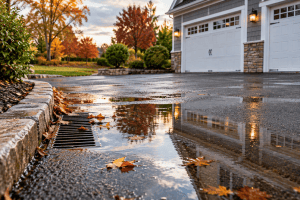
Low spots deserve particular attention. A depression that holds water during a fall rain can become an icy area during winter. Standing water can also be a clue that grading or drainage should be evaluated before new pavement is installed.
John McGowan & Sons notes that drainage, compaction, and proper base preparation are major factors in long-term driveway performance across Long Island. The company provides asphalt paving along with grading, drainage, excavation, and related site work, allowing underlying property conditions to be addressed instead of treating only the surface.
That is an important distinction. If poor drainage is causing repeated pavement failure, simply covering the driveway with another layer of asphalt may not provide the long-term result a homeowner expects.
Timing and Asphalt Temperature Matter
Fall can still provide excellent paving conditions on Long Island, but there is a point when cold weather begins working against the installation process.
Hot-mix asphalt has to remain sufficiently warm while crews place and compact it. As the mix cools, the asphalt binder becomes stiffer and increasingly difficult to compact. The Asphalt Pavement Alliance explains that obtaining proper density depends heavily on completing compaction while the mix remains within its workable temperature range.
New York State Department of Transportation specifications also illustrate how surface temperature affects asphalt placement. For example, state specifications establish minimum pavement surface temperatures that vary depending on asphalt lift thickness. These standards are written for NYSDOT projects rather than as a blanket rule for every residential driveway, but they demonstrate why contractors pay close attention to ground temperature and weather during late-season paving.
A warm fall afternoon after several mild days is different from trying to pave when the ground is approaching freezing. Rain matters too. A saturated base should be corrected and allowed to reach appropriate conditions rather than simply being covered with asphalt.
Long Island pre-winter driveway guide
What condition is your driveway in before winter?
Small cracks, potholes, low spots and drainage problems can become more serious once water begins cycling between freezing and thawing. Use this guide to understand what the visible damage may mean and when repair, resurfacing or full repaving may deserve a closer look.
Start with what you see
Select the condition that most closely matches your driveway. These are general guidelines—a site inspection is still needed to evaluate the asphalt, base, grading and drainage.
Crack repair may be enough
Small isolated cracks do not automatically mean the driveway needs replacement. Sealing vulnerable openings before winter may help reduce the amount of water that reaches the pavement and underlying base.
Patching may stabilize localized failures
One or two potholes may be repairable when the surrounding pavement and base remain stable. Repeated potholes in the same location can point to a deeper drainage or base problem.
Drainage and grading should be evaluated
Water that remains in low spots can freeze during winter and may indicate improper grading, poor drainage or settlement. Those conditions should be addressed before simply adding a new asphalt layer.
Consider resurfacing or full replacement
Widespread cracking, sinking sections, crumbling asphalt or repeated repair failures can indicate that the driveway needs more than isolated patching. The condition of the base will help determine whether resurfacing or full replacement makes more sense.
How winter turns a small problem into a bigger one
Existing damage gives water a pathway into the pavement. Repeated freezing and thawing can gradually make that damage worse.
A small opening develops in the asphalt.
Rain or melting snow enters the opening.
Trapped moisture freezes and expands.
The pavement becomes increasingly vulnerable.
Repeated movement can contribute to potholes and failure.
Repaving before winter: advantages and cautions
Fall can be an excellent time for driveway work when conditions remain suitable. The project should never be rushed simply to beat the calendar.
✓ Potential advantages
- Correct widespread cracking before freeze-thaw cycles
- Repair potholes and uneven pavement
- Improve grading and drainage
- Create a smoother surface for snow removal
- Improve curb appeal before winter
! Reasons not to rush
- Cold temperatures shorten asphalt compaction time
- Heavy rain can leave the base too wet
- A saturated or unstable base may require delay
- Some driveways only need patching or resurfacing
- Installation quality matters more than beating a date
Not sure whether to repair, resurface or repave? McGowan can evaluate the asphalt, grading, drainage and base conditions before winter.
Request a Driveway QuoteRepair, Resurface, or Completely Repave Before Winter?
Homeowners often use the term “repaving” to describe several different types of asphalt work, but there is an important difference between patching, resurfacing, and complete replacement.
Patching focuses on isolated failures. A damaged section or pothole is removed or prepared and repaired without rebuilding the entire driveway. It can be appropriate when most of the pavement remains structurally sound.
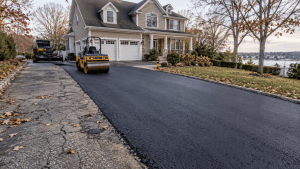
Resurfacing generally involves placing a new asphalt layer over a properly prepared existing pavement. Before resurfacing, failed sections still need to be repaired and the existing surface must provide an adequate foundation. Resurfacing can restore a worn driveway without the excavation required for full replacement.
Full replacement goes deeper. Existing pavement is removed so the contractor can evaluate and correct the base, grading, drainage, and other underlying conditions before new asphalt is installed
Should You Schedule a Long Island Driveway Evaluation Before Winter?
If a driveway is already showing significant deterioration, waiting until spring without having it evaluated can allow another winter to magnify the problem.
That does not mean every Long Island homeowner should immediately replace an aging driveway in September or October. It means fall is a good time to determine what is causing the deterioration and how urgent it actually is.
A contractor should look at the complete driveway: asphalt condition, crack patterns, potholes, edges, grading, drainage, base stability, driveway apron, and areas where water enters or leaves the property.
John McGowan & Sons has been serving New York property owners since 1928, handling asphalt paving and resurfacing along with drainage, grading, excavation, concrete, masonry, and broader site work. The company currently serves residential, commercial, and municipal properties throughout Nassau and Suffolk County.
That broader site-work experience matters when a driveway problem involves more than the visible blacktop.
A driveway that continually develops cracks because water is moving underneath it needs a different solution from pavement that has simply reached the end of its service life. Likewise, a low spot caused by improper grading should be corrected rather than repeatedly patched.
If your driveway has widespread cracks, potholes, standing water, sinking areas, crumbling edges, or repeated repair failures, schedule an assessment before winter weather settles in.
There may still be time to repave or resurface under suitable conditions. If there is not, John McGowan & Sons can identify the repairs needed to protect the property through winter and plan the correct long-term solution for the next paving window.
The goal is not simply to get new asphalt down before the first freeze. It is to build a driveway with the proper base, drainage, grading, materials, and compaction to handle Long Island winters for years to come.
Recent Posts