
Masonry Contractor Smithtown NY

Request A Free Quote

Unfortunately, we are not servicing your area at this time. Please contact our office if you have questions.

A patio that heaves after one winter is a masonry problem, not bad luck. John McGowan & Sons builds masonry for Smithtown homeowners and holds every project to the standard Long Island weather demands. As masonry contractors working across Suffolk County, we plan drainage and footings first, then build the stonework on top.

What We Build in Smithtown

Retaining wallsKeystone block, natural stone or brick, set on a prepared base with drainage stone and filter fabric behind the wall. See our retaining wall work.
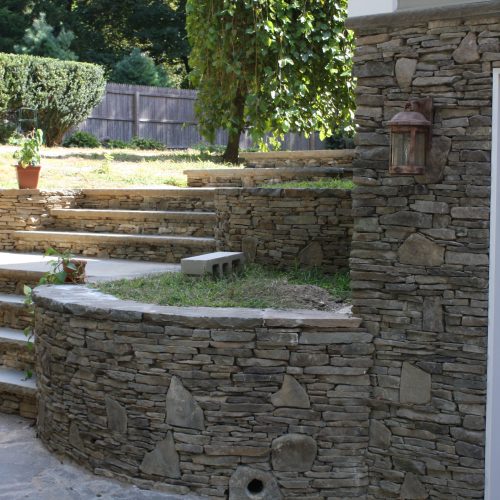
Stone masonry structuresPiers, entry columns and a sitting wall, built in natural stone masonry.
Brick masonryBrick walkways, steps and borders, plus brick pointing to repair worn mortar before water gets in.
Stone veneersStone veneers and brick and stone veneers for house walls, columns and chimneys.
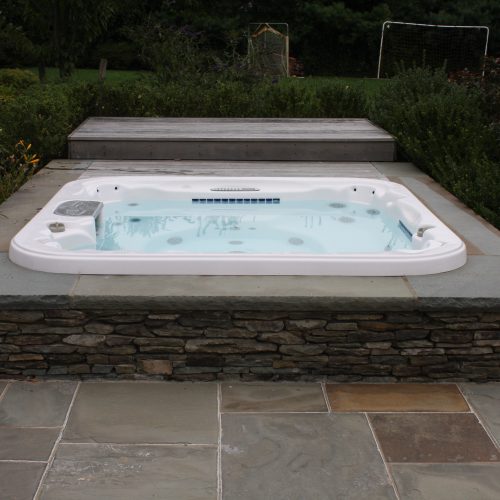
Bluestone treads and paversBluestone treads on steps and bluestone pavers on patios and walks.
Concrete patiosConcrete patios and pool patios, built for a rear yard patio that will get used.
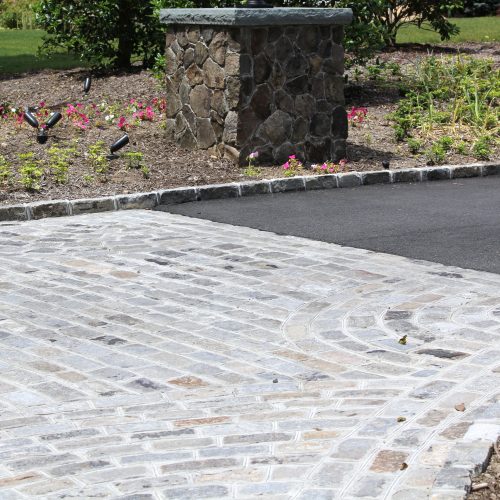
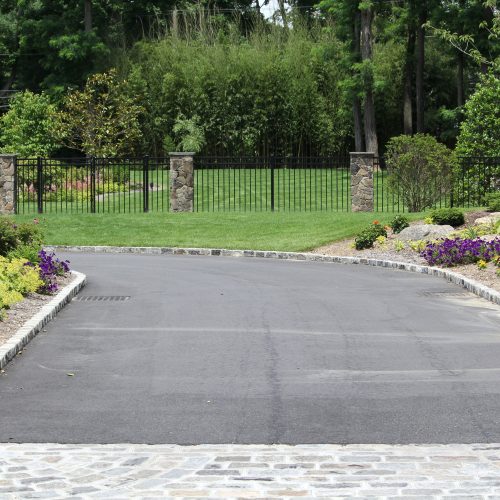
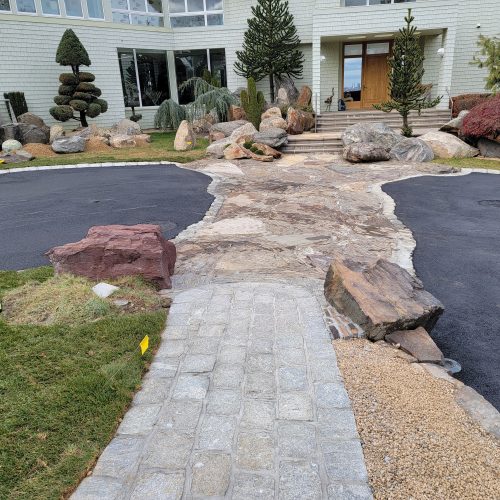
Belgium block and graniteAprons and curbing that give a driveway a clean edge.
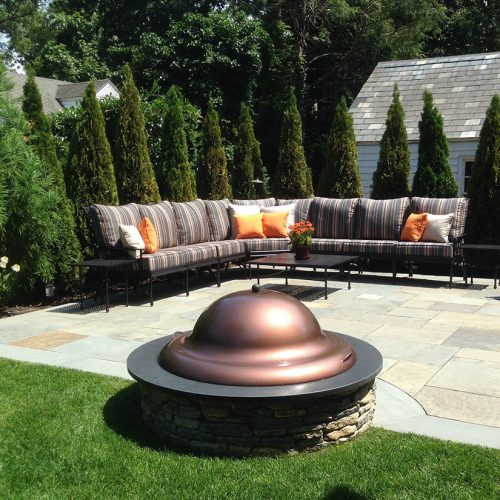
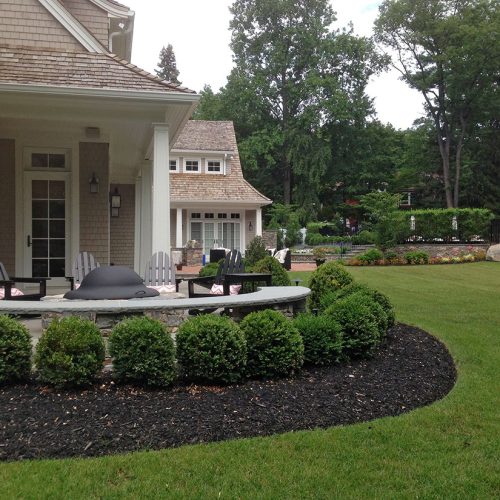
Fire pits and fireplacesStone fire pits and outdoor fireplaces, built with the patio instead of added after.

Done well, these upgrades raise property value and support a larger landscape design instead of competing with it. You can see the full range on our masonry and hardscaping services page.

Why Homeowners Choose McGowan 1928 Over Other Long Island Paving Companies

From Pioneer Paving to All Pro Paving Long Island, the region is full of contractors — but McGowan 1928 continues to stand out. Here’s why:

What Sets Us Apart

  • Licensed and insured paving contractors with over 95 years of trusted service.
  • Full-service asphalt paving, driveway repairs, and seal coating.
  • Decorative upgrades like paver bricks, Belgium block curbing, and patio paving.

We’re not just another paving company — we’re a team committed to paving contracting excellence and long-term client satisfaction.

Walls and steps start below the surface

Water and frost do most of the damage in a New York winter. A wall with no drainage stone behind it fills with water. A footing set above frost depth moves every time the ground freezes and thaws. Either one shows up the same way: leaning stone, open joints and steps that tilt.
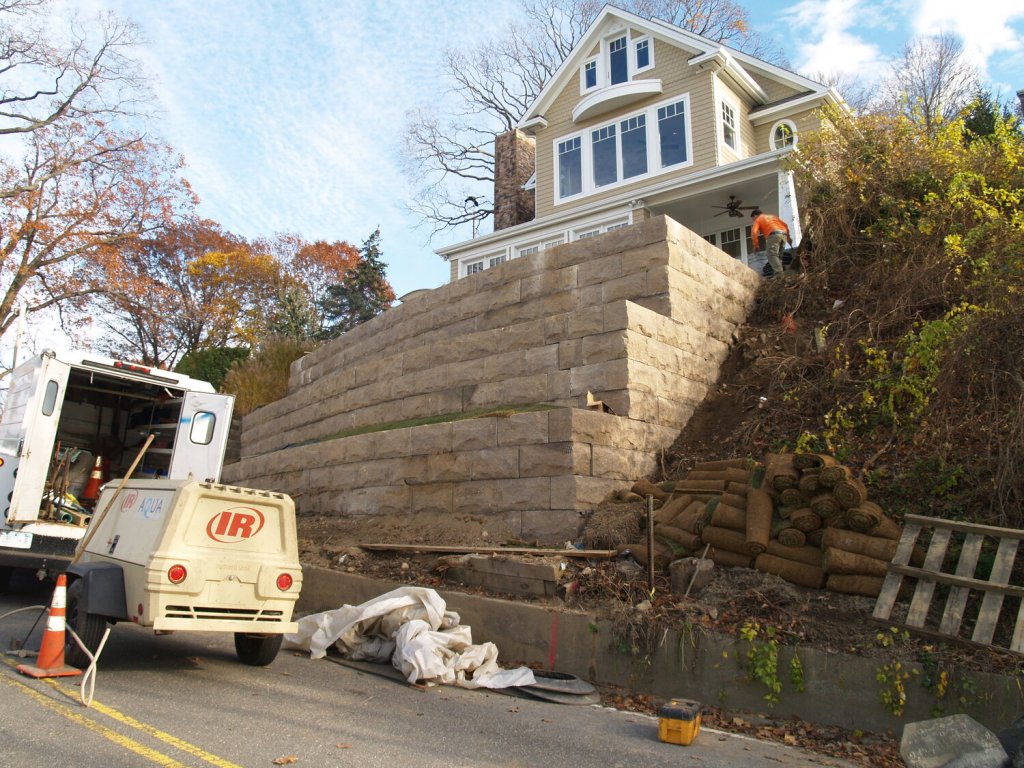
Large block retaining wall holding back a hillside beside a home
A block retaining wall holding a hillside beside a home, built by McGowan.
  1. ExcavateDig below frost depth for the footing and down to undisturbed soil.
  2. Base and drainCompacted base, drainage stone, filter fabric and a pipe where the site needs one.
  3. Set the stoneBlock, natural stone or brick goes up course by course, tied into the grade.
  4. Backfill and finishBackfill in layers, cap the wall, and grade the yard so water leaves.

Before construction begins, we look at the slope, the soil and where water already runs. The wall gets designed around what we find.

The Outdoor Kitchen Question

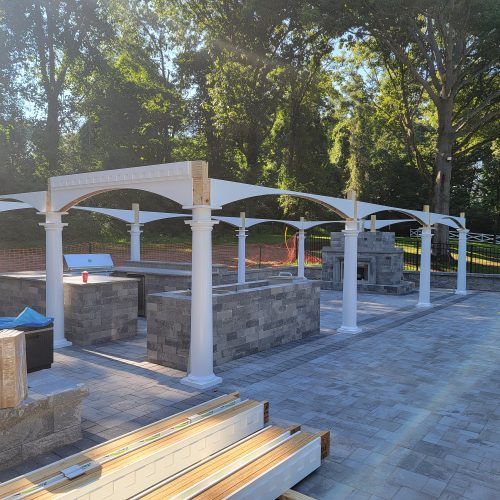
An outdoor kitchen is the project that changes how a family uses the whole yard, so it deserves the most planning. A good outdoor kitchen starts with where the grill, counters, and seating will sit in relation to the house, then works backward to utilities and drainage. Masonry counters and stone veneers give the outdoor kitchen a finished look, and a fire pit or outdoor fireplace can anchor the seating beside it. Add LED lighting, plus bluestone treads and wrought iron railings on nearby steps, and the space stays safe after dark. On a rear yard patio, the outdoor kitchen should never block the walk from the back door to the lawn.

Built for Frost, Not Just Looks

Frost depth decides whether a wall or patio survives. In New York, footings that stop above frost depth shift as the ground freezes and thaws, which cracks joints and tilts steps. Good masonry contractors prepare for that before any stone goes down:

1. Excavate below frost depth for walls and steps

2. Build a compacted base with proper drainage

3. Set the stone only after the base is right

How Do You Verify a Contractor's License Status?

Ask for the license number, then check the license status with the town or county before you sign anything. Requirements differ by municipality, so confirm what applies to your project in Smithtown and in Nassau County. The Town of Smithtown is the right place to start for local requirements, and any contractor you hire should be glad to show proof of license status and insurance.

Planning a project in Suffolk County or Nassau County? Talk to local masonry contractors who build for the conditions here.

Helpful Resources for Smithtown, NY Homeowners

Smithtown, NY is located in Suffolk County on Long Island, where seasonal freeze-thaw cycles, varying soil conditions, sloped properties, and drainage challenges can influence the durability of patios, retaining walls, walkways, and other masonry installations. Homeowners planning masonry or hardscaping projects should consider local building requirements, proper base preparation, and drainage conditions to support long-lasting results.

See Why So Many Choose McGowan 1928