Before summer traffic picks up, property managers and commercial building owners should take a serious look at the condition of their parking lot. A worn asphalt surface does more than hurt curb appeal. It can affect parking access, traffic flow, ADA accessible parking, parking lot markings, drainage systems, customer safety, and the overall experience people have when they arrive at your property.
For shopping centers, office buildings, apartment communities, medical facilities, schools, event venues, and mixed-use properties, a parking lot is part of the first impression. If visitors are dodging blacktop potholes, faded lines, standing water, broken edges, loose debris and dirt, or uneven pavement, the property starts to feel neglected before they even walk inside.
Summer can make these issues worse. Heat, UV rays, regional climate conditions, heavier vehicle use, and sudden storms can all speed up asphalt deterioration. If the lot already has cracks, potholes, surface discoloration, drainage issues, warping and buckling, or failing repairs, resurfacing before summer may be more cost-effective than waiting until the damage spreads.
Parking lot resurfacing is not the same as basic seal coating. Seal coating protects the surface, while resurfacing restores a worn asphalt layer when the pavement is still structurally sound enough to support a new overlay. The right solution depends on the condition of the asphalt, the base, the drainage, and how the lot is used.
1. Cracks and Blacktop Potholes Are the First Warning Signs
Cracks are one of the clearest signs that your parking lot needs attention. Small cracks may look harmless at first, but they allow water to enter the pavement. Once water reaches the base layer, it can cause foundation erosion, soft spots, and deeper asphalt failure. That is when a minor maintenance issue can turn into a larger parking lot paving problem.
Blacktop potholes usually mean the surface has already weakened. They often form when water gets below the asphalt, traffic breaks away loose material, and the pavement loses support from underneath. A few isolated potholes may be handled with blacktop pothole repair, but repeated potholes across the lot can point to a bigger issue.
Crack filler and patching can help when the damage is limited. However, if cracks are spreading through drive lanes, parking spaces, ADA accessible parking areas, loading zones, or pedestrian routes, resurfacing may be the smarter long-term repair. A paving contractor can inspect whether the lot only needs crack sealing and seal coating or whether the surface has reached the point where resurfacing is necessary.
This is especially important before summer because heat can expand existing cracks, while storms can push more water into the pavement. If the lot is already breaking apart in spring, summer traffic can make the damage more visible and more expensive.
2. Faded Parking Lot Markings Can Create Confusion and Safety Issues
Parking lot markings are more than paint. They help control traffic flow, identify parking locations, guide pedestrians, separate drive lanes, mark fire lanes, and support ADA compliance. When lines fade, drivers become less certain about where to park, where to stop, and how to move through the property.
This can become a problem for commercial properties with surface lots, parking garages, event parking, visitor parking, employee parking, EV charging stations, electric vehicle spaces, shuttle services, recreational vehicles, or mixed-use access points. A faded lot can make even a well-designed property feel disorganized.
Some property owners try to fix this with fresh striping only. That may help if the asphalt surface is still in good condition. But if the lot is gray, brittle, cracked, uneven, or stained, the new paint may not hold as well. In that case, resurfacing the parking lot before applying new striping can create a cleaner, more durable result.
A resurfaced lot also gives you the opportunity to rethink the layout. Property managers may need to adjust parking access, ADA accessible parking, crosswalks, directional arrows, loading zones, pay stations, electric charging stations, or visitor spaces. For properties that use parking permits, a parking pass system, license plate recognition, or a digital parking permit system, clear markings help support smoother enforcement and better daily operations.
Using UV-resistant paint after resurfacing can also help markings stay visible longer under summer sun exposure.
Parking Lot Resurfacing Warning Signs Before Summer
A commercial parking lot often shows small warning signs before larger asphalt failure begins. Use this quick guide to understand when basic asphalt maintenance may be enough and when parking lot resurfacing should be considered.
| Warning Sign | What It Usually Means | Possible Solution | Why It Matters Before Summer |
|---|---|---|---|
| Cracks and Blacktop Potholes | Water may be entering the pavement and weakening the asphalt base. | Crack filler, blacktop pothole repair, resurfacing, or localized base repair. | Summer heat and storms can expand cracks and make potholes worse. |
| Faded Parking Lot Markings | Traffic flow, ADA accessible parking, and parking access may become unclear. | Restriping with UV-resistant paint after surface repairs or resurfacing. | Clear markings help drivers, pedestrians, customers, and employees move safely. |
| Standing Water or Drainage Issues | The lot may have low spots, poor slope, clogged drainage systems, or base movement. | Drainage correction, asphalt repair, milling, resurfacing, or reconstruction. | Water infiltration can lead to foundation erosion and faster pavement failure. |
| Warping and Buckling | The pavement may be shifting because of base problems, heavy traffic, or seasonal movement. | Professional inspection, milling and reclamation, resurfacing, or full-depth repair. | Uneven asphalt can create trip hazards and vehicle damage concerns. |
| Loose Debris, Dirt, or Crumbling Edges | The surface may be breaking down and losing structural integrity along joints or edges. | Sweeping, edge repair, crack sealing, resurfacing, or parking lot paving improvements. | Loose asphalt and broken edges can spread quickly during peak business periods. |
| Worn Surface and Discoloration | UV rays, oxidation, traffic, and weather may be drying out the asphalt surface. | Seal coating if wear is light, resurfacing if the surface is brittle or failing. | A worn lot absorbs summer heat and can deteriorate faster under daily use. |
3. Drainage Problems Can Mean the Asphalt Is Losing Support
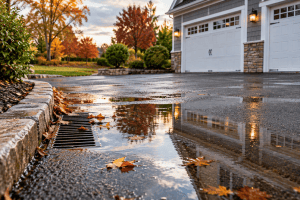
Standing water is one of the biggest signs that a parking lot needs professional attention. If water collects in low areas after rain, near catch basins, around curbs, beside parking meters, or close to entrances, the lot may have drainage issues that need to be corrected before resurfacing.
Good drainage systems move water away from the asphalt. Poor drainage lets water sit on the surface or seep into cracks. Over time, this can cause foundation erosion, potholes, crumbling edges, and base failure. Once the base becomes unstable, simple seal coating will not solve the problem.
Drainage issues are especially important for properties with heavy traffic, surface lots, parking garages, shuttle services, event parking, or large customer volume during peak business periods. A medical office, retail center, apartment complex, or commercial campus cannot afford unsafe puddles, icy depressions, or areas where customers have to walk around standing water.
A paving contractor should evaluate slope, drainage systems, catch basins, curbs, and low spots before recommending resurfacing. In some cases, the lot may need localized asphalt repair, milling and reclamation, or drainage correction before the new asphalt surface is installed.
Resurfacing without fixing drainage is risky. The finished lot may look better at first, but the same water problems can cause premature cracking and potholes.
4. Warping, Buckling, and Uneven Pavement Are Signs of Deeper Wear
Warping and buckling are serious warning signs. A parking lot should feel stable and smooth for both vehicles and pedestrians. If the asphalt is lifting, dipping, waving, or breaking apart, the problem may be deeper than surface wear.
These issues can happen because of poor drainage, base movement, freeze-thaw cycles, tree roots, heavy vehicles, repeated traffic in the same drive lanes, or improper asphalt installation. In New York and the Northeast, seasonal considerations matter because pavement expands, contracts, freezes, thaws, and takes on water throughout the year.
Uneven pavement can create trip-and-fall hazards, vehicle damage, poor snow removal conditions, and accessibility concerns. It can also interfere with parking enforcement, parking management, license plate systems, and safe circulation through the property. If parking enforcement officers, tenants, visitors, or employees have trouble navigating the lot because of pavement conditions, the asphalt is no longer just a maintenance issue.
Resurfacing can help when the surface layer is worn but the base remains stable. If the base has failed, the contractor may need to remove damaged sections, repair the foundation, or recommend milling and reclamation before placing new asphalt.
This is why an inspection matters. A professional asphalt paving contractor can determine whether the parking lot needs resurfacing, full-depth repair, or a more complete parking lot paving solution.
5. Surface Wear, UV Rays, and Discoloration Can Show Aging Asphalt
Asphalt naturally changes as it ages. A newer parking lot usually has a darker, smoother appearance. Over time, sun exposure, oxidation, UV rays, vehicle traffic, oil stains, chemicals, and weather turn the surface gray and brittle. When the asphalt starts to lose its flexibility, cracking and raveling become more likely.
Surface discoloration alone does not always mean resurfacing is required. Sometimes seal coating is enough to protect the pavement and refresh the appearance. But if discoloration appears with cracks, loose aggregate, blacktop potholes, rough texture, or widespread wear, the top layer may be nearing the end of its useful life.
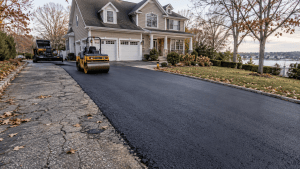
This is where the difference between seal coating and resurfacing matters. Seal coating is a protective treatment. It can help slow oxidation and improve appearance, but it does not rebuild a damaged asphalt surface. Resurfacing provides a new wearing course over the existing lot after the necessary prep and repairs are completed.
Summer sun can make old asphalt look worse and perform worse. In hot climates, people often talk about the Florida sun damaging pavement, but the same basic principle applies in New York. UV exposure, heat, water, and traffic all stress asphalt. The regional climate may be different, but the result is similar: pavement that is already weak will continue to break down if it is ignored.
6. Debris, Dirt, Weeds, and Edge Erosion Show the Lot Is Breaking Down
Debris and dirt may seem like simple cleaning issues, but they can hide bigger asphalt problems. Loose gravel, broken asphalt pieces, standing dirt, weeds, and crumbling edges are signs that the surface is deteriorating.
Weeds are especially important. If vegetation is growing through cracks, water and soil have already entered the pavement. Roots can widen the cracks and make the asphalt break apart faster. This is common near curbs, islands, landscaped edges, drainage areas, and older patches.
Edge erosion is another sign to watch for. Parking lot edges take a lot of abuse from runoff, snowplows, turning vehicles, delivery trucks, and poor drainage. Once the edges start to crumble, water can enter from the sides and weaken the asphalt base.
This matters for all types of parking areas, including surface lots, parking garages with exposed approaches, parking locations near loading areas, and lots with heavy event parking. If the property hosts seasonal events, has Memorial Day Holiday traffic, weekend demand, or peak business periods, the lot should be repaired before higher use makes the damage worse.
A well-planned asphalt maintenance schedule can include sweeping, crack filler, seal coating, blacktop pothole repair, and drainage inspections. But when debris, weeds, edge failure, and cracks appear throughout the lot, resurfacing may be needed to restore the surface properly.
When to Choose Resurfacing Instead of Basic Asphalt Maintenance
Not every parking lot needs resurfacing. Some lots only need crack sealing, seal coating, pothole repair, new markings, or improved cleaning. The goal is to choose the repair that fits the actual condition of the pavement.
Basic asphalt maintenance may be enough if the lot has minor cracks, light fading, limited wear, and no major drainage issues. This could include crack filler, seal coating, fresh parking lot markings, sweeping, and small blacktop pothole repair.
Parking lot resurfacing may be the better choice if the lot has widespread cracks, repeated potholes, rough texture, surface deterioration, fading, drainage problems, warping and buckling, edge failure, or multiple failed patches. Resurfacing can restore the driving surface, improve appearance, extend pavement life, and make the property safer and easier to navigate.
Full reconstruction or milling and reclamation may be needed if the base has failed, the pavement is severely uneven, drainage systems are not working, or the lot has major foundation erosion. In those cases, simply placing new asphalt over the old surface may not solve the underlying problem.
The best time to evaluate the lot is before summer traffic increases. Spring and early summer give property managers time to schedule paving contractors, plan around tenants, avoid peak business periods, and address construction impacts before they become urgent. If your property has heavy summer use, outdoor events, holiday closures, visitor traffic, or special parking needs, early planning is even more important.
A professional contractor can inspect the lot, explain the cost difference between maintenance and resurfacing, and recommend a practical plan based on the property’s layout, drainage, traffic, and long-term use.
Get Your Parking Lot Ready Before Summer Damage Gets Worse
A parking lot does not fail all at once. It usually gives warning signs first: cracks, blacktop potholes, faded markings, drainage problems, warping and buckling, surface discoloration, weeds, debris, dirt, broken edges, and unsafe pedestrian areas. Ignoring those signs can lead to larger repairs, higher costs, and a worse experience for customers, tenants, employees, and visitors.
Before summer, property owners should look at both the pavement condition and the way the lot functions. Are parking spaces clear? Are ADA accessible parking areas easy to identify? Are EV charging stations, pay stations, parking meters, shuttle zones, and visitor spaces easy to reach? Are drainage systems working? Are potholes affecting traffic flow? Are parking lot markings still visible? Are surface lots and parking garages giving people a clean, safe first impression?
If the answer is no, resurfacing may be the right next step.
McGowan helps property managers, commercial property owners, and facility teams evaluate asphalt conditions, plan parking lot paving improvements, and choose
Recent Posts