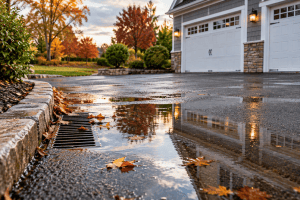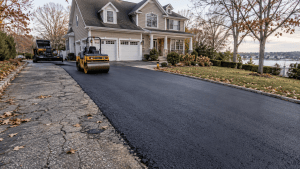
Spring rain has a way of showing property owners exactly where water wants to go. After winter snowmelt, freeze-thaw cycles, and months of cold weather, driveways, walkways, patios, and parking lots often reveal drainage problems that were easy to miss during the colder season. A small puddle near the edge of a driveway may seem harmless at first, but standing water can point to deeper issues with grading, soil settlement, base erosion, clogged drains, or damaged pavement.
For New York homeowners and commercial property owners, spring is one of the most important times to inspect hardscape surfaces. Rainwater that pools around asphalt, concrete, masonry, or paver areas can shorten pavement life, create soft spots, contribute to potholes, and even direct water toward foundations or basement walls. The sooner drainage issues are identified, the easier they are to correct before they become expensive repairs.
Why Spring Rain Makes Drainage Problems Easier to Spot
Drainage problems often become more obvious in spring because the ground is already recovering from winter. Soil may be compacted, frozen in spots, oversaturated from snowmelt, or weakened by repeated freeze-thaw cycles. When spring storms arrive, water cannot always absorb into the soil or move away from paved areas the way it should.
This is why water pooling around a driveway, walkway, or parking lot after a spring rain should not be ignored. The surface may look like the problem, but the real cause is often underneath or around it. Poor grading, clogged catch basins, blocked downspouts, damaged drain pipes, low pavement areas, or worn base material can all change the way stormwater moves across a property.
Spring also reveals problems because pavement expands and contracts during winter. Small cracks in asphalt or concrete may widen. Edges may shift. Paver joints may settle. Low spots can form where soil has washed out beneath the surface. When rain falls, water naturally collects in those weak areas, making them easier to see.
For property owners, this season offers a useful warning. If water is sitting on a driveway, crossing a walkway, pooling near a garage, or collecting in a parking lot, the property is showing where drainage work may be needed.
Common Signs of Poor Drainage Around Driveways and Walkways
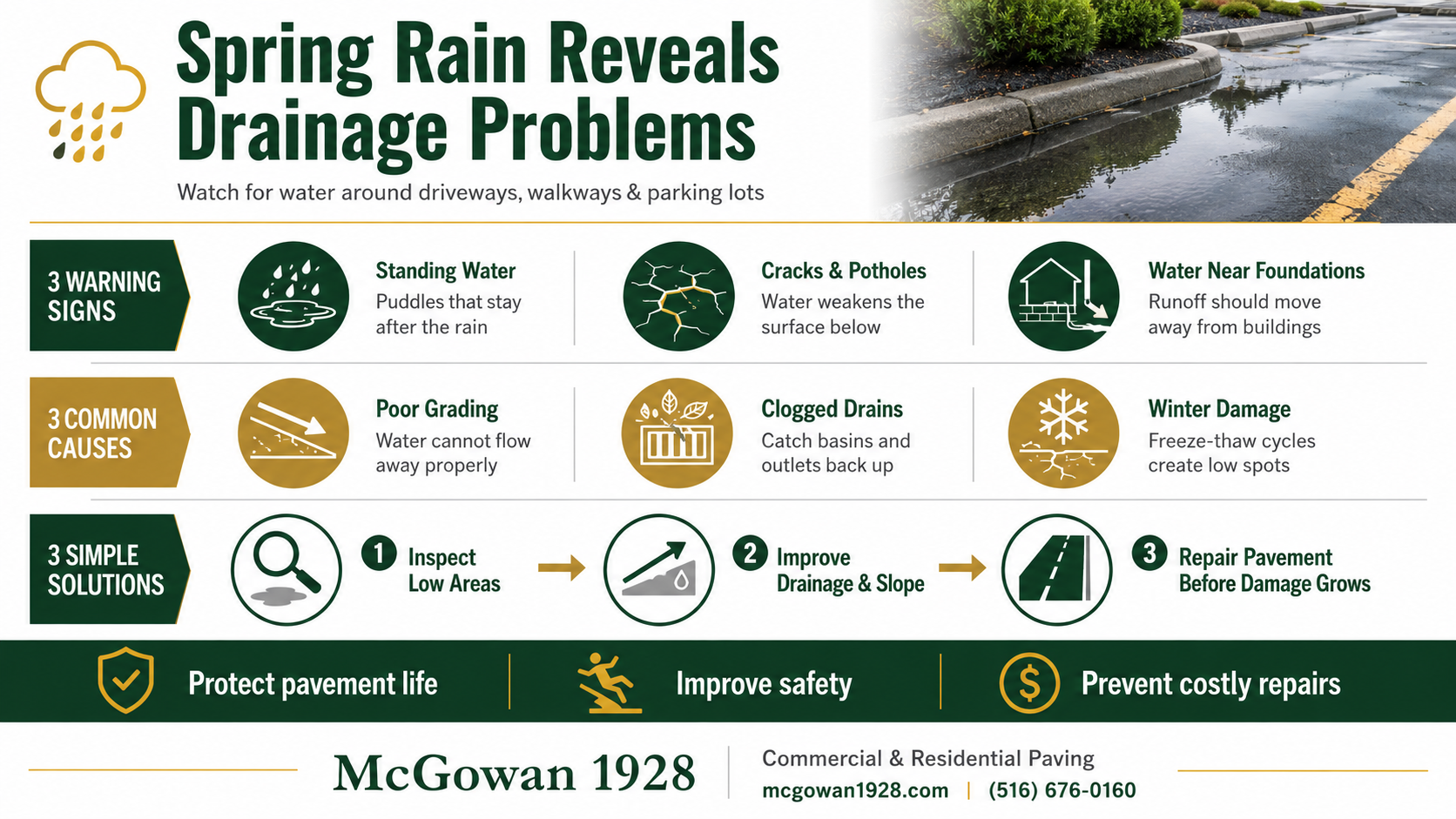
The most obvious sign of a drainage issue is standing water that remains long after the rain stops. A small puddle that disappears quickly may not be a major concern, but water that sits for hours or returns to the same spot after every storm usually deserves attention.
Other warning signs include cracks near low areas, crumbling asphalt edges, loose pavers, muddy soil along a walkway, erosion next to a driveway, or soft spots that feel unstable underfoot. In asphalt driveways, drainage problems may also show up as potholes that keep coming back after patching. This often happens when water has already weakened the base layer beneath the pavement.
Concrete and masonry surfaces can show different symptoms. You may notice uneven slabs, sinking sections, widening joints, water stains, or surface scaling. Around paver walkways and patios, poor drainage can cause sand washout, shifting pavers, and dips where water collects.
Water flowing toward the home is another serious sign. If runoff from a driveway, walkway, patio, or parking area is moving toward the foundation instead of away from it, the property may be at higher risk for basement leaks, crawl space moisture, or foundation wall pressure. The EPA explains that stormwater runoff can carry pollutants and create drainage challenges when it is not managed properly
How Poor Grading Creates Standing Water
Grading is one of the most important parts of drainage. A paved surface should be shaped so water moves away from buildings and toward a safe drainage area. When grading is too flat, uneven, or sloped in the wrong direction, water has nowhere to go. It sits on the surface or moves toward areas that should stay dry.
Driveways need proper pitch to direct water away from garages, foundations, and neighboring structures. Walkways should shed water without sending it across high-traffic pedestrian areas. Parking lots need a larger drainage plan because they handle more surface runoff and often rely on catch basins, drains, curbs, and pavement slope.
Poor grading can happen for several reasons. Sometimes a surface was never installed correctly. In other cases, soil settlement changes the slope over time. Tree roots, utility trench repairs, erosion, heavy traffic, or repeated snowplow activity can also alter the shape of the surface.
When grading fails, drainage solutions may include regrading, milling, resurfacing, installing drains, adjusting the base, rebuilding low sections, or improving the surrounding landscape. The right fix depends on whether the issue is mainly on the surface, below the surface, or connected to the property’s larger stormwater flow.
Winter Snowmelt and Freeze-Thaw Cycles Can Weaken the Base
Winter can be hard on paved and masonry surfaces. Snow, ice, and freezing temperatures allow water to enter cracks, joints, and porous materials. When that water freezes, it expands. When it thaws, it contracts and moves again. Over time, this freeze-thaw process can widen cracks, loosen materials, and weaken the layers beneath the surface.
Spring rain adds more water to areas that may already be vulnerable. If the base under a driveway or parking lot has been disturbed by winter moisture, water can settle below the pavement and begin washing away support. This can lead to depressions, cracking, potholes, and surface movement.
This is especially common in areas where drainage was already weak before winter. A small low spot in the fall can become a larger ponding area by spring. A minor crack can turn into a path for water infiltration. A patched pothole can reopen if the underlying base erosion was never corrected.
For gravel driveways, spring drainage problems often appear as ruts, muddy sections, loose stone, or areas where the surface material has washed away. For asphalt driveways and parking lots, the signs may be standing water, alligator cracking, potholes, or soft pavement. For walkways, the signs may be sinking slabs, uneven pavers, or muddy borders.
Drainage Problems Around Parking Lots Can Affect Safety and Curb Appeal
Commercial parking lots face more drainage stress than most residential driveways. They handle vehicle traffic, delivery trucks, snow removal equipment, pedestrians, and larger amounts of stormwater runoff. When drainage problems appear in a parking lot, they can affect safety, accessibility, and the professional appearance of the property.
Standing water in a parking lot can hide potholes, create slippery conditions, damage striping, and make the property look poorly maintained. In colder weather, low drainage areas can freeze into ice patches. Around pedestrian walkways, entrances, and accessible parking spaces, water collection can become a safety concern.
Poor drainage can also shorten the life of asphalt pavement. Water that enters cracks or collects near catch basins can weaken the pavement base. Once the base loses strength, surface repairs may not last. This is why potholes often return in the same area when the drainage issue underneath has not been solved.
For commercial properties, drainage and pavement planning should work together. A strong parking lot may require grading adjustments, catch basin repair, asphalt resurfacing, milling, curb repair, crack filling, sealcoating, or full-depth pavement repairs in damaged areas. The goal is not only to improve appearance, but also to help water move properly across the lot.
Drainage Systems That Help Move Water Away From Hardscapes
There are several drainage solutions that can help move water away from driveways, walkways, patios, and parking areas. The best option depends on the property layout, soil conditions, slope, pavement type, and where the water needs to go.
French drains are commonly used to collect and redirect water below the surface. They typically include a trench, perforated pipe, gravel, and filter fabric that allow water to move away from problem areas. They can be useful near driveways, retaining walls, low lawn areas, and hardscape edges.
Catch basins are often used in parking lots and larger paved areas. They collect surface water and connect to underground drain pipes. When catch basins are clogged, sunken, cracked, or surrounded by damaged asphalt, water may begin pooling around them instead of entering the system properly.
Swales are shallow graded channels that guide water across a landscape. They can help move runoff away from paved surfaces without relying entirely on underground drains. Downspout extensions can also make a major difference around homes. If roof water is being discharged near a driveway, walkway, patio, or foundation, it can overload the area and create recurring drainage issues.
The New York State Stormwater Management Design Manual provides guidance on managing stormwater through planning, runoff control, and drainage design: https://efc.ny.gov/stormwater-management-design-manual
When Drainage Issues Start Affecting Foundations and Basements
Drainage problems around driveways and walkways are not only pavement concerns. When water consistently moves toward a home or building, it can affect the foundation, basement, or crawl space. Water near foundation walls can increase hydrostatic pressure, seep through cracks, or contribute to moisture problems inside the structure.
Homeowners may notice damp basement smells, water stains, peeling paint, efflorescence on masonry walls, or actual basement leaks after spring rain. These symptoms may be connected to grading, clogged drains, short downspouts, or hardscape surfaces that direct water toward the building.
Even if the foundation itself is structurally sound, poor drainage can create ongoing moisture stress. The goal is to reduce the amount of water sitting near the foundation and improve the path water takes after storms.
This may involve regrading soil, adjusting driveway slope, repairing walkway pitch, extending downspouts, adding drain systems, rebuilding sunken hardscape areas, or improving the transition between paved surfaces and landscape areas. Addressing the cause early can help prevent bigger moisture problems later.
Why DIY Drainage Fixes Do Not Always Solve the Cause
Some simple drainage maintenance can be handled by property owners. Cleaning leaves from drains, clearing debris from gutters, extending downspouts, removing mulch buildup near paved edges, and monitoring low areas after storms are all helpful steps.
However, not every drainage problem can be solved with a quick fix. If water keeps pooling in the same place, if pavement is sinking, if potholes keep returning, or if runoff is moving toward a structure, the issue may require professional assessment. Adding gravel, patching asphalt, or digging a small trench may only hide the problem temporarily if the grading or base structure is failing.
Professional drainage and hardscape work looks at the full picture. That includes the paved surface, base material, soil conditions, slope, nearby structures, downspout discharge, catch basins, drain pipes, and traffic patterns. For commercial properties, it may also include ADA accessibility, pedestrian movement, parking lot striping, and stormwater management needs.
The right repair should correct the reason water is collecting, not just cover the symptom. That is how property owners can avoid repeating the same patch every spring.
Schedule Drainage, Paving, and Hardscape Repairs Before Problems Grow
Spring is the right time to take drainage problems seriously. If rain is revealing standing water, erosion, sinking pavement, cracked walkways, recurring potholes, soft spots, or runoff near your foundation, those signs should be inspected before the damage spreads.
McGowan & Sons helps New York property owners repair and improve driveways, walkways, parking lots, masonry surfaces, asphalt pavement, and related hardscape areas. Whether the solution involves grading adjustments, asphalt repair, resurfacing, drainage improvements, catch basin work, concrete repair, or a larger paving project, the goal is to build a surface that looks better, performs better, and lasts longer.
A property should not have to fight water after every storm. With the right drainage and paving plan, spring rain can move where it belongs instead of damaging your driveway, walkway, parking lot, or foundation. Contact McGowan & Sons to schedule an estimate and protect your property before small drainage issues become larger repairs.
Recent Posts