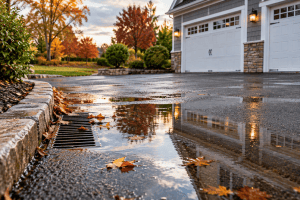
Quick answer: Asphalt is too cold to pave in New York when the surface temperature falls below about 50°F for a typical driveway layer, or any time the ground is wet or frozen. Thicker layers can go down a little cooler, around 40°F, but a driveway is rarely that thick. Below those temperatures the hot mix asphalt loses heat faster than a crew can compact it, and the pavement starts failing before its first spring.
Why 50 degrees is the number contractors watch
Hot mix asphalt leaves the plant at roughly 280 to 320 degrees Fahrenheit and has to be rolled before it cools to about 175°F, according to paving industry guidance. That is a short window, and cold air and cold ground shrink it fast. A driveway layer is usually only about two inches thick, so it gives up its heat much faster than the thick layers used on highways. That is why cold temperatures matter so much for asphalt paving.
The minimum temperature depends on how thick the layer is. A Federal Highway Administration pavement review lists these minimum surface temperatures for placing hot mix, measured on the surface where the asphalt will go:
And on a wet or frozen base, do not pave at any temperature. Surface temperature matters more than the number on a weather app. A shaded driveway on a windy November morning can be much colder than the afternoon forecast suggests.
What goes wrong when asphalt is laid in the cold
The mix cools before it is compacted
Compaction is what makes asphalt dense and waterproof. An industry write up from Dura Seal in The Blue Book notes that in air temperatures around 40°F to 45°F, a 1.5 inch layer must be fully compacted within about 16 minutes, while a 3 inch layer has about 45 minutes. A crew that gets delayed by a truck, a rain shower or a slow roller loses the window. Good compaction also depends on having enough workers, rollers and other equipment on site to reach the required density before the mat cools. Asphalt that is not compacted keeps air voids that let water in, and cold weather paving often ends with voids above 8 to 10 percent.
Water and freeze thaw finish the job
Long Island sees more freeze and thaw days than New York City, a Stony Brook University climate scientist told CBS New York. Water that gets into poorly compacted pavement freezes, expands and pushes the surface apart. By spring the result is raveling, alligator cracking and potholes. If your driveway is already cracked, our guide to crack cleaning and filling explains how to keep water out before the first hard freeze.
How air, wind and ground conditions affect asphalt paving
Paving conditions change by the hour. The ambient temperature at 7 a.m. can be much lower than at 2 p.m., and the ground can stay cold long after the air warms up. A warm afternoon does not help if the base is still cold from the night before. Wind pulls heat out of the mix quickly, which shortens the time a crew has to place and compact the asphalt. Rain and damp materials make the process worse, because water trapped under the mat can cause blisters and stripping.
Experienced crews check the pavement temperature, the thickness of the layer and the conditions on site before the trucks arrive. A thin overlay needs warmer weather than a thick base course. Parking lots built in thick lifts can sometimes be paved in cooler temperatures than a residential driveway, which is why a contractor may say yes to one job and no to another on the same day.
When the asphalt paving season ends in New York
There is no single calendar date, because the weather decides it. In New York the practical season runs from spring, once nights stop freezing, to late fall. Asphalt plants can also close for the winter, and when the plant is closed there is no hot mix to buy no matter how mild the week is. That is why fall jobs get booked early and the rest wait for spring.
The best paving weather is warm and dry, when daytime temperatures hold comfortably above 50°F and the ground has dried out. Summer gives crews the longest window, and warmer weather in late spring and early fall works too. On Long Island that usually means late spring through early fall, with summer as the easiest season of all.
What you can do for your driveway in cold weather
Safe to do now
- Use cold patch asphalt on potholes and trip hazards. It stays workable in low temperatures and is a temporary fix until spring.
- Clear leaves and debris so water drains off the surface.
- Photograph cracks, low spots and crumbling edges so you can show a contractor exactly what you see.
- Get a written estimate so your project is ready for the first good paving weather.
Better to wait until spring
- A new driveway or a full replacement.
- Resurfacing over a sound base.
- Any patch you expect to last for years.
For repair options, see our page on asphalt driveway repair on Long Island. If you are deciding whether to repave before winter, read Should You Repave Your Driveway Before a Long Island Winter?
Questions to ask a paving contractor in late fall
- What will the surface temperature be when you lay the mix?
- How thick will the new layer be?
- How long will the mix travel from the plant, and is the plant open?
- What happens if the weather turns on paving day?
- What does the written guarantee cover?
Cold weather paving FAQ
Can you pave asphalt in 40 degree weather?
What is the best time of year to pave a driveway in New York?
Is cold patch a permanent fix?
How do I plan a driveway for spring?
Planning a driveway for spring?
Book a free estimate now and we will line up your project for the first good paving weather.
Recent Posts