
Why You Should Fix Winter Driveway Cracks in Long Island Before Spring Gets Worse
Updated on:
March 11, 2026
After a long Long Island winter, many homeowners step outside and notice something new — cracks spreading across their driveway that weren’t there just a few months ago. At first, they might seem minor, easy to ignore, or just part of normal wear and tear. But in reality, winter driveway cracks are often the beginning of much larger and more expensive problems.
As temperatures rise and snow begins to melt, the damage caused by months of freezing, moisture, and salt exposure starts to reveal itself. What looks like a small surface crack today can quickly turn into potholes, structural damage, or even full driveway failure if left untreated. Understanding why this happens — and why early spring is the ideal time to act — can save Long Island homeowners thousands in repairs.
How Long Island Winters Cause Hidden Driveway Damage
Long Island winters are particularly tough on asphalt and concrete driveways. Between fluctuating temperatures, snow accumulation, and constant moisture exposure, your driveway is under continuous stress for months at a time.
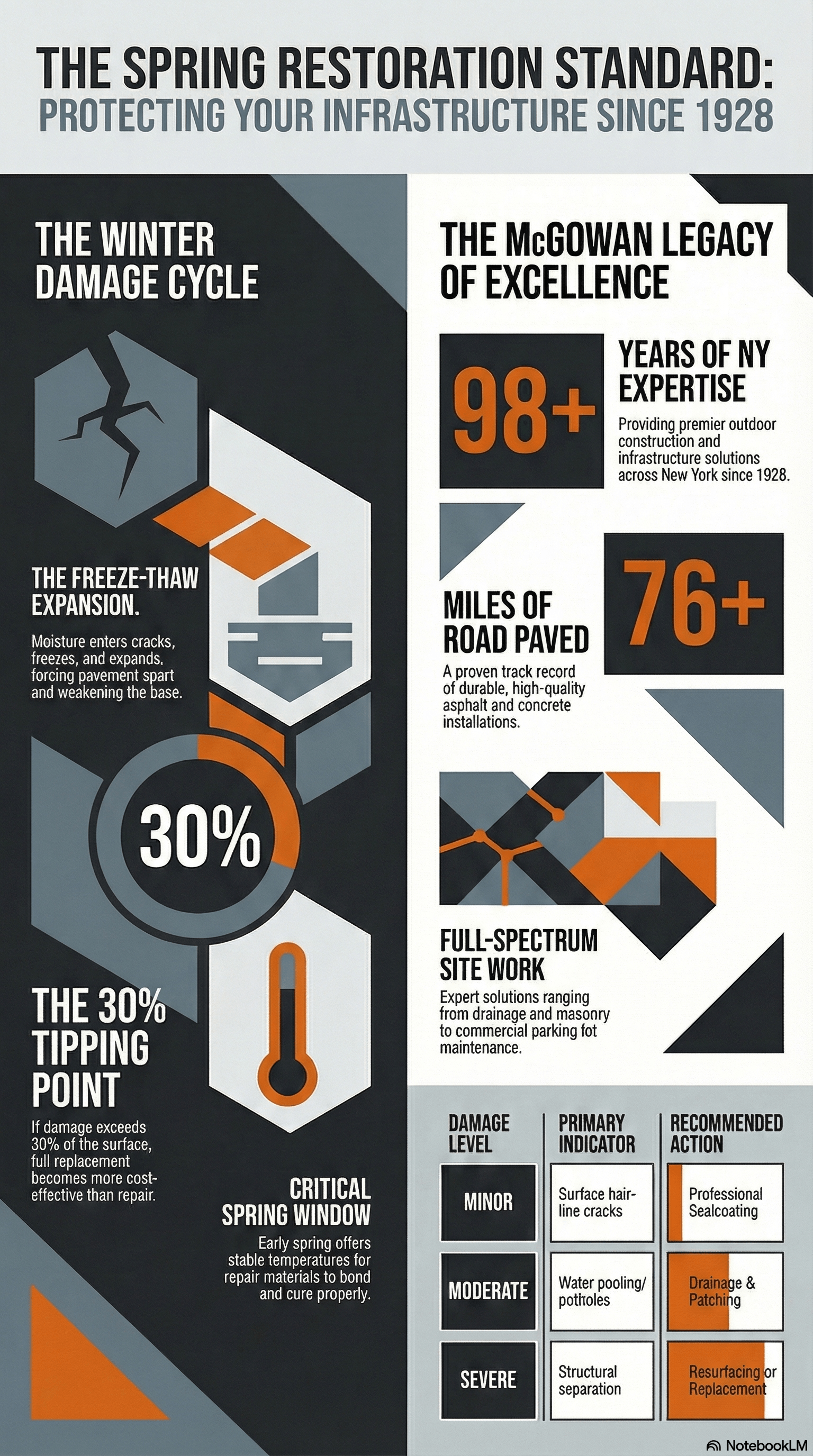
Water seeps into even the smallest cracks or surface imperfections. As temperatures drop overnight, that moisture freezes and expands, putting pressure on the surrounding material. Over time, this repeated stress weakens the integrity of the driveway, causing cracks to grow wider and deeper beneath the surface.
On top of that, de-icing salts and snow removal contribute to surface deterioration. Salt accelerates the breakdown of asphalt and concrete, while shoveling and plowing create additional friction that wears down protective layers. By the time spring arrives, the visible cracks are often just a sign of deeper structural issues forming underneath.
The Freeze-Thaw Cycle: Why Cracks Get Worse Fast
One of the biggest causes of driveway damage in Long Island is the freeze-thaw cycle. This process happens when temperatures fluctuate above and below freezing, which is extremely common in late winter and early spring.
Here’s what happens:
Moisture enters small cracks → temperatures drop → water freezes and expands → pressure builds → cracks widen.
When the ice melts, it leaves behind more space for water to enter again. This cycle repeats over and over, each time making the cracks worse. Eventually, the surface begins to break apart, leading to potholes, uneven areas, and weakened pavement.
This is why homeowners often notice that their driveway looks significantly worse in March than it did in December. The damage has been building all winter — and now it’s accelerating.
Why Small Driveway Cracks Turn Into Expensive Problems
Ignoring driveway cracks might seem harmless at first, but small issues rarely stay small. Once water infiltration begins, the damage spreads beneath the surface where it’s harder to see.
Over time, this can lead to:
- Larger cracks and surface separation
- Pothole formation
- Base layer deterioration
- Drainage issues and water pooling
- Reduced lifespan of your driveway
In many cases, what could have been a simple crack repair turns into a much larger project involving resurfacing or full replacement. A commonly cited rule in the industry is that if more than 25–30% of your driveway is damaged, replacement may become more cost-effective than repair .
Acting early is what prevents that tipping point.
Signs Your Driveway Needs Repair Right Now
Not all cracks require immediate replacement, but there are clear signs that your driveway should be addressed as soon as possible.
If you notice cracks that are widening, spreading, or forming patterns across the surface, it’s a sign that structural stress is already present. Areas where water pools after rain or snowmelt indicate drainage issues, which can accelerate deterioration.
You may also see surface crumbling, loose material, or early signs of potholes forming. These are all indicators that the damage is no longer just cosmetic — it’s affecting the integrity of the pavement.
The earlier these issues are identified and repaired, the more options you have to fix them efficiently and cost-effectively.
Why Early Spring Is the Best Time for Driveway Repair in Long Island
Timing plays a major role in how effective driveway repairs are. Early spring is one of the best times to address winter damage because temperatures begin to stabilize, allowing repair materials to properly bond and cure.
More importantly, repairing cracks now prevents further damage as spring rains increase moisture exposure. Without intervention, water continues to seep into the pavement, restarting the freeze-thaw cycle during colder nights and accelerating deterioration.
Another factor many homeowners overlook is scheduling. As the season progresses, paving and repair companies become busier. Addressing driveway issues early in the season helps avoid long wait times and ensures your property is ready before peak usage months.
Repair vs Replacement: What Homeowners Should Know
One of the most common questions homeowners have is whether they should repair their driveway or replace it entirely. The answer depends on the extent of the damage.
If cracks are minor and isolated, crack filling and sealing can effectively restore the surface and prevent further deterioration. However, if the damage is widespread, involves deep structural issues, or affects a significant portion of the driveway, resurfacing or replacement may be the better long-term solution.
A professional inspection can determine the condition of the base layer and identify whether the damage is surface-level or structural. Making the right decision early can save both time and money while ensuring long-term durability.
How to Protect Your Driveway From Future Winter Damage
Once repairs are completed, preventative maintenance becomes key to extending the life of your driveway. Sealcoating helps protect asphalt surfaces from moisture and UV exposure, while proper drainage ensures water is directed away from the pavement.
Regular inspections allow homeowners to catch small cracks early before they expand. Keeping the surface clean and minimizing salt exposure when possible can also reduce long-term wear.
In Long Island, where seasonal weather conditions are unavoidable, proactive maintenance is the best way to avoid repeated damage year after year.
Recent Posts


